Six days is a luxury. It allows you to stop chasing the horizon and start looking at the people and the history that paint this land. This isn’t a road trip designed to tick boxes; it’s a slow burn through the soul of Morocco. We peel back the layers of the imperial cities, lose ourselves in the living history of the mountain villages. And sit with the nomads who have called the desert home for centuries. By the time you arrive in Marrakech. You won’t just have seen the country; you will have felt its pulse, tasted its spices, and heard the stories that echo off the ancient kasbah walls.
Highlights: 6 days cultural tour from Fes to Marrakech
- Meeting the Gnawa musicians in the desert village of Khamlia
- Walking through the “Hollywood of Africa” and ancient Kasbahs
- Visiting the remote, crumbling palace of Telouet (off the beaten path)
- Hiking in the Todra Gorge and seeing the nomad caves
- A full cultural immersion day in Marrakech’s palaces and souks
- Crossing two major mountain ranges (Middle and High Atlas)
Itinerary: 6 days cultural tour from Fes to Marrakech
Day 1: Fes to Merzouga desert
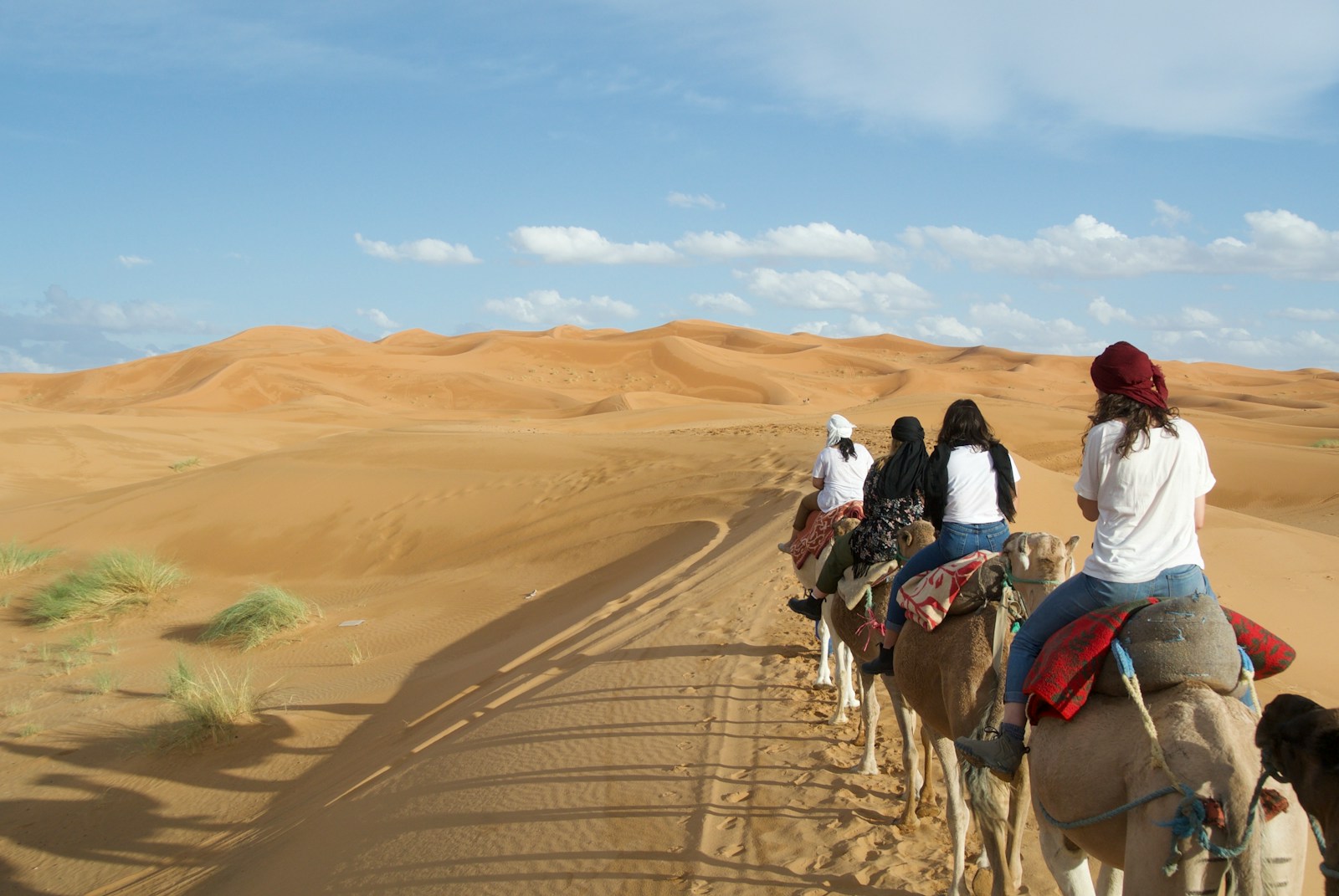
The journey travels south into the Middle Atlas Mountains. Passing the alpine town of Ifrane and the resin-scented cedar forests of Azrou, home to wild Barbary macaques. The route then descends dramatically through the ancient palm groves of the Ziz Valley, arriving in Merzouga at sunset. As the landscape turns to golden dunes, the culture shifts from Arab to Amazigh, marking the beginning of a peaceful desert immersion at the edge of the Erg Chebbi.
Day 2: Nomads, Music, and the Valley of Roses
The day begins with the magic of a sunrise camel trek, but the real cultural work starts after breakfast. We head to Khamlia, a village inhabited by descendants of slaves from sub-Saharan Africa. Here, you won’t just listen to music; you’ll feel the spiritual trance of the Gnawa rhythms while sipping tea with the locals. We then visit a nomad family living under canvas tents in the harsh desert, learning about their resilience and traditions. Leaving the desert behind, we drive north through the “Road of a Thousand Kasbahs.” We stop in the Valley of Roses, where locals still distill rose water by hand, and walk through the Todra Gorge. Here, the sheer cliff walls tower over a lush river, a favorite spot for Moroccan picnickers. We end the day in the Dades Valley, sleeping in a kasbah-style guesthouse surrounded by the strange, finger-like rock formations of the region.
Day 3: Earthen Castles and the Road to Marrakech
Today is dedicated to the architecture of the south; mud, straw, and sun-baked earth. We visit the Kasbah of Amridil, a remarkably preserved fortress that looks like a sandcastle from a fairy tale. Offering a window into how feudal lords once lived. The road then takes us to Ouarzazate, the cinematic center of the country, before we arrive at the jewel in the crown: Ait Ben Haddou. This UNESCO site is a striking example of southern Moroccan architecture and a living ksar (fortified village).
We wander through its high walls, crossing the riverbed where caravans once stopped. Unlike the standard route, we then tackle the high road over the Tizi n’Tichka pass. The drive is an adventure in itself, winding past Berber villages that seem glued to the mountainsides, offering glimpses of a way of life that has remained unchanged for centuries. We descend into the Haouz plains, arriving in Marrakech as the sun sets, transferring to our Riad in the old city.
Day 4: The Red City Unveiled
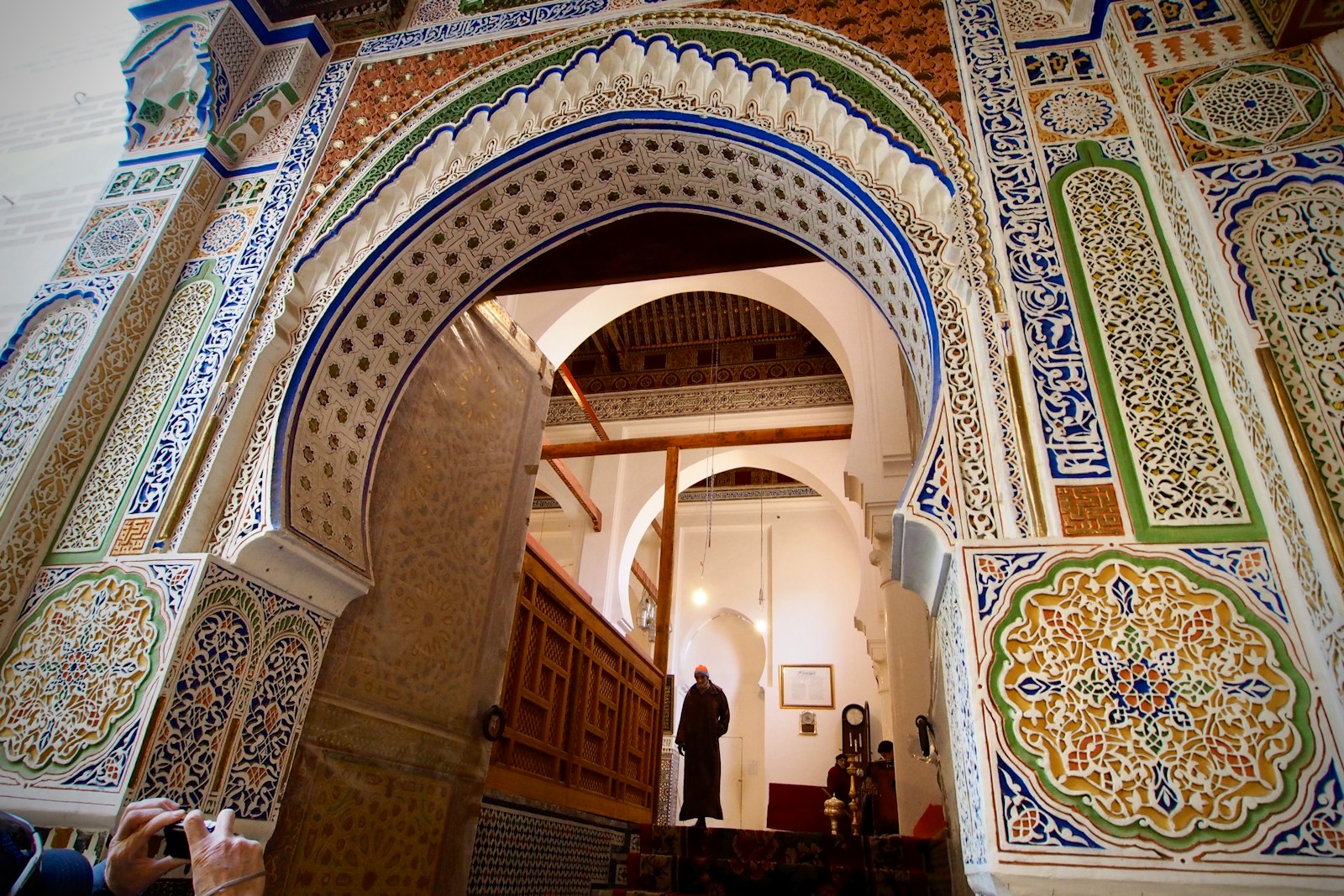
We dedicate today entirely to the cultural heartbeat of Marrakech. We start at the Koutoubia Gardens, a haven of peace, before entering the opulent Bahia Palace, a masterpiece of 19th-century architecture designed to capture the essence of Islamic and Moroccan style. Then we visit the Ben Youssef Madrasa, once the largest theological college in North Africa, where the intricate stucco and cedar carvings tell stories of scholarly devotion. Lunch is at a local spot where the tagine simmers for hours. In the afternoon, we dive into the souks; not just to shop, but to see the artisans at work. We’ll watch blacksmiths beating metal, coppersmiths hammering teapots, and weavers working on looms. The day ends at the Jemaa el-Fnaa square, watching it transform from a bustling market by day to a carnival of storytellers, musicians, and food stalls by night.
Day 5: The Majorelle Gardens and Jewish Heritage
Our cultural exploration continues with a visit to the Majorelle Gardens, a tranquil explosion of cobalt blue and exotic plants, once owned by Yves Saint Laurent. Next to it lies the Yves Saint Laurent Museum, a tribute to the designer’s love for Morocco. We then visit the historic Jewish Quarter, the Mellah, exploring the synagogue and the spice markets that have historically connected the city to trade routes across the world. The afternoon is for a more relaxed pace you can visit a traditional hammam for a scrub and massage, experiencing the cleansing ritual central to Moroccan life, or sip mint tea on a rooftop overlooking the Medina. We gather for a farewell dinner in a authentic restaurant, enjoying Moroccan entertainment and reflecting on the journey.
Day 6: Departure or Coastal Extension
On your final day, the morning is yours to enjoy a leisurely breakfast or grab any last souvenirs from the specific quarters known for leather or woodwork. Depending on your flight time. We can arrange a short visit to the Agafay desert stone plains for a different kind of landscape view, or simply relax in the riad courtyard. We transfer you to the airport or your next destination, marking the end of a journey that has taken you from the north to the south, from the mountains to the desert, and through the very heart of Moroccan culture.
Included
- Private air-conditioned transport (minivan or 4×4)
- Expert English-speaking driver/guide
- Official local guides in Fes and Marrakech (for historical sites)
- Fuel and tolls
- 1 Night luxury desert camp (Half Board)
- 4 Nights in authentic Riads/Hotels (Bed & Breakfast)
- Camel trek in Merzouga
- Entrance fees to mentioned monuments
Excluded
- Lunches and drinks
- Tips and gratuities
- Personal expenses and shopping
- Dinners in cities (except desert camp)